sudoku
Unlock Endless Logic Fun With Sudoku Puzzle Challenges
Sudoku: A Timeless Puzzle for Every Logic Enthusiast
Sudoku is one of the most popular puzzle games in the world. It combines simple rules with deep logical thinking, creating an experience that appeals to players of all ages. Whether someone is looking for a relaxing mental exercise or a challenging brain workout, Sudoku offers a perfect balance between entertainment and skill development.
The game appears simple at first glance. A grid contains several numbers, and the goal is to fill the empty spaces correctly. However, each puzzle requires concentration, observation, and logical deduction. This unique combination has helped Sudoku remain relevant for decades and continue attracting new players every day.
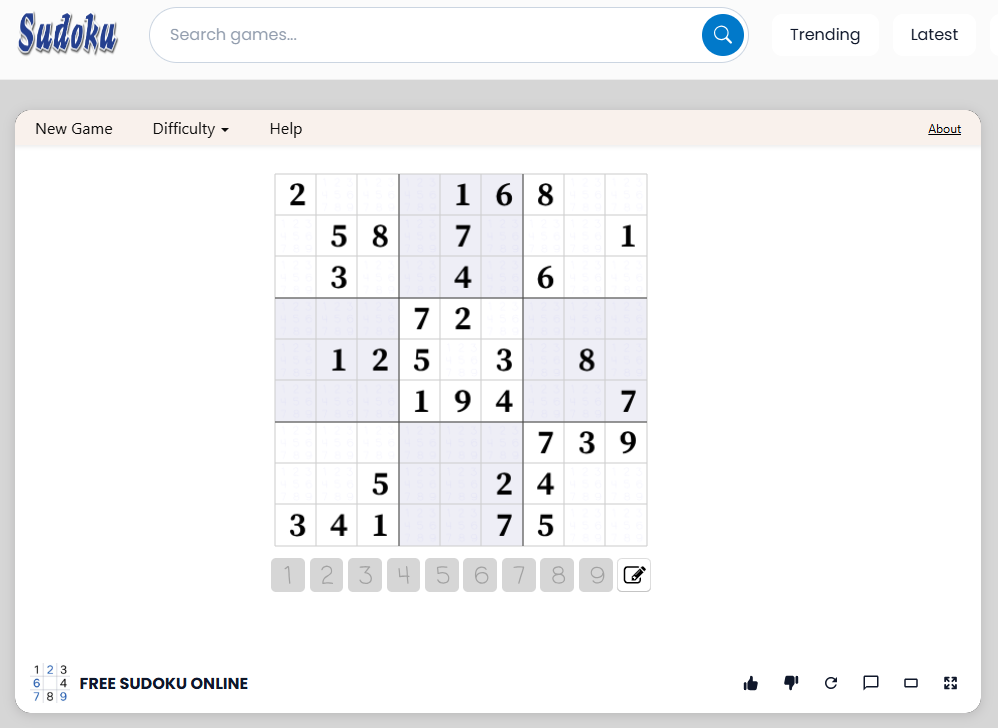
Understanding the Basics of Sudoku
The Structure of the Puzzle
A standard Sudoku puzzle uses a 9x9 grid. The grid is divided into nine smaller 3x3 sections. Players must fill every empty cell with numbers from 1 to 9.
The challenge comes from three important rules. Each row must contain every number from 1 to 9 without repetition. Each column must also contain every number from 1 to 9 without repetition. Finally, each 3x3 section must include every number from 1 to 9 exactly once.
These simple rules create countless puzzle possibilities and varying difficulty levels.
Why Sudoku Is Easy to Learn
Many puzzle games require extensive instructions before players can begin. Sudoku is different because the core concept is straightforward. Even beginners can understand the objective within a few minutes.
As players gain experience, they begin to recognize patterns, develop solving techniques, and improve problem-solving efficiency. This gradual learning curve makes Sudoku accessible while still providing long-term challenges.
Benefits of Playing Sudoku Regularly
Strengthening Logical Thinking
Sudoku encourages players to think carefully before making decisions. Every number placement affects the rest of the grid. Success depends on evaluating available information and drawing logical conclusions.
Regular practice helps strengthen reasoning skills and promotes structured thinking. Many players enjoy the satisfaction that comes from solving a difficult puzzle through logic rather than guesswork.
Improving Concentration
Modern life often includes distractions from phones, social media, and constant notifications. Sudoku provides an opportunity to focus on a single task.
Completing a puzzle requires sustained attention. Players must analyze rows, columns, and sections while keeping track of possible number placements. This process helps improve concentration and mental discipline.
Supporting Memory Development
Although Sudoku is primarily a logic game, memory also plays an important role. Players frequently remember number positions, potential solutions, and elimination patterns while progressing through a puzzle.
This combination of logic and memory creates a valuable mental exercise that many people enjoy as part of a daily routine.
Popular Sudoku Strategies
Scanning Rows and Columns
One of the most common techniques involves scanning rows and columns for missing numbers. By identifying which numbers are absent, players can narrow down possible placements.
This method often helps solve easier puzzles and provides a strong foundation for more advanced strategies.
Using Candidate Numbers
As puzzle difficulty increases, many players use candidate numbers. Small notes indicate possible values for each empty cell.
By comparing candidates across rows, columns, and sections, players can eliminate impossible options and identify correct placements more efficiently.
Recognizing Patterns
Experienced Sudoku players often rely on pattern recognition. Certain arrangements appear repeatedly across puzzles.
Recognizing these patterns allows players to solve complex sections faster and avoid unnecessary trial-and-error approaches.
Different Types of Sudoku Puzzles
Classic Sudoku
Classic Sudoku remains the most widely played version. It follows the traditional 9x9 format and provides a familiar challenge for players around the world.
Many newspapers, websites, and mobile applications feature classic Sudoku puzzles every day.
Mini Sudoku
Mini Sudoku uses smaller grids, making it ideal for beginners or players with limited time. These puzzles can often be completed quickly while still providing a satisfying mental challenge.
Mini versions are also useful for learning basic solving techniques before moving to larger grids.
Killer Sudoku
Killer Sudoku introduces additional rules involving grouped cells and numerical totals. Players must combine traditional logic with arithmetic skills to complete the puzzle.
This variation offers an extra layer of complexity and appeals to puzzle enthusiasts seeking greater challenges.
Samurai Sudoku
Samurai Sudoku consists of multiple overlapping grids connected together. Solving these puzzles requires careful planning and advanced logical thinking.
Many experienced players enjoy Samurai Sudoku because of its scale and unique structure.
Sudoku in the Digital Age
Mobile Applications and Online Platforms
Technology has made Sudoku more accessible than ever. Mobile applications allow players to enjoy puzzles anytime and anywhere. Online platforms offer thousands of puzzles across different difficulty levels.
Features such as hints, progress tracking, and automatic error checking create a convenient experience for both beginners and advanced players.
Daily Challenges and Competitive Play
Many Sudoku platforms provide daily challenges that encourage consistent practice. Some websites also host competitions and leaderboards where players compare completion times and solving accuracy.
These features add excitement while motivating players to improve their skills.
How Sudoku Supports Lifelong Learning
Sudoku appeals to people across multiple generations. Children can use the game to develop logical reasoning and attention to detail. Adults often enjoy Sudoku as a relaxing mental activity after work. Older individuals may appreciate the opportunity to stay mentally active through regular puzzle solving.
Unlike many forms of entertainment, Sudoku combines enjoyment with cognitive engagement. Every completed puzzle reinforces logical thinking and provides a sense of accomplishment.
The game also encourages patience and persistence. Difficult puzzles may require multiple approaches before revealing a solution. This process teaches players the value of careful analysis and determination.
The Lasting Appeal of Sudoku
Sudoku continues to thrive because it offers a unique combination of simplicity and depth. The rules are easy to understand, yet the puzzles can provide endless challenges. Players can enjoy a quick puzzle during a break or spend significant time solving complex grids.
From beginners exploring their first puzzle to experienced enthusiasts seeking advanced challenges, Sudoku remains a rewarding activity. Its ability to strengthen logical thinking, improve concentration, and deliver satisfying problem-solving experiences ensures that Sudoku will remain a favorite puzzle game for years to come.
For anyone searching for a fun and meaningful mental exercise, Sudoku stands as one of the best choices available. Each puzzle presents a new opportunity to test reasoning skills, build confidence, and enjoy the timeless appeal of logical problem-solving.